
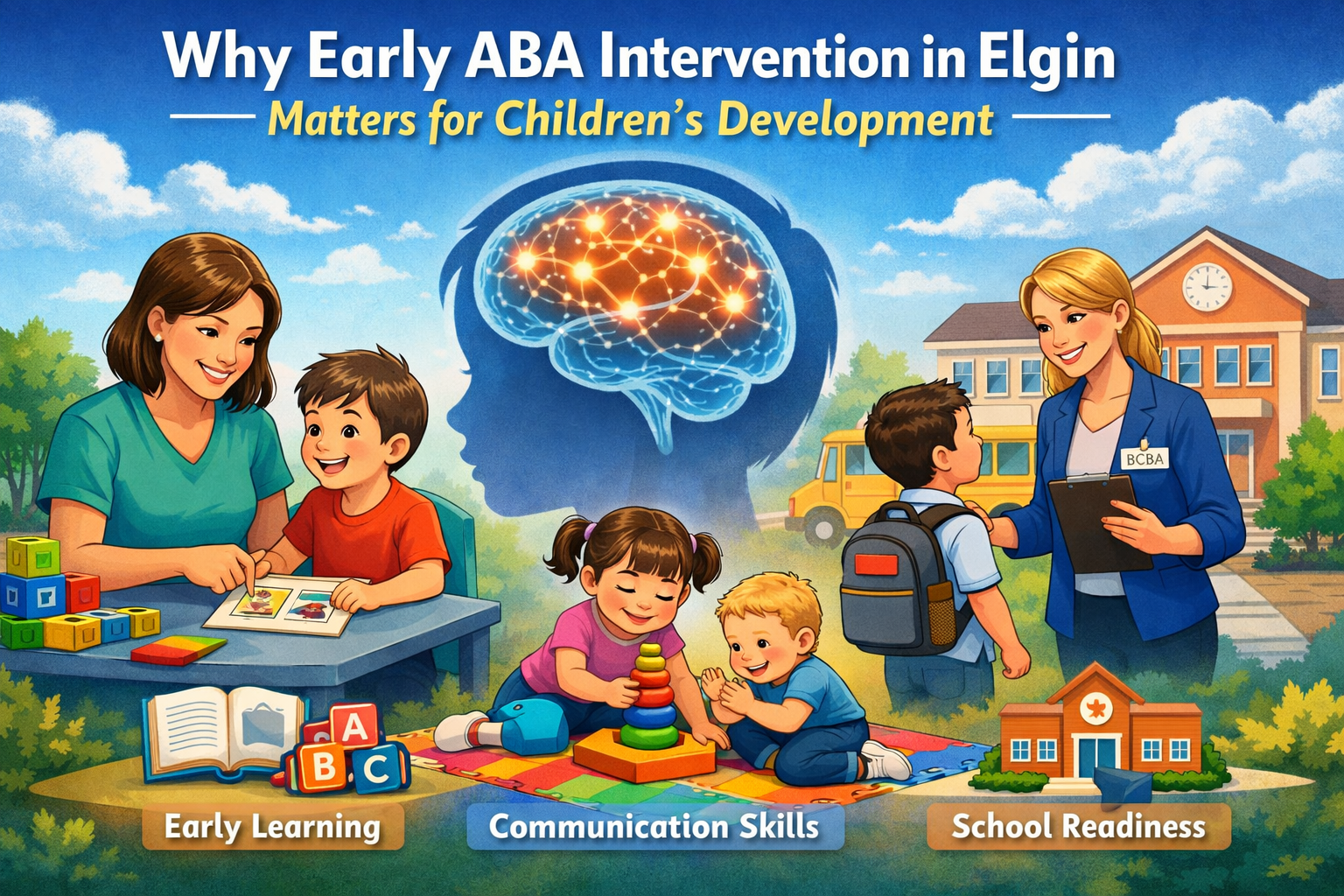
An autism diagnosis usually leads straight to a clinical recommendation for immediate support. Choosing early ABA intervention in Elgin is supported by research indicating that a child’s brain is highly adaptable before age five. This period of neuroplasticity may support meaningful gains in both cognitive and behavioral development. At Newline Behavioral Solutions, we use this developmental window to help build foundational skills that may reduce the need for more intensive support later.
The Clinical Impact of Neuroplasticity in Early Childhood
Research suggests the brain demonstrates significant adaptability during the toddler and preschool years. In the context of Autism Spectrum Disorder (ASD), this means behavioral therapy has a deeper impact on how sensory information and social cues are processed. Providing early intervention before age five targets developmental milestones while core neural pathways are still forming. This proactive approach is associated with improved long-term outcomes in school settings for many children.
Functional Communication and Behavioral Regulation
A primary goal of clinic-based ABA therapy is functional communication training. Many challenging behaviors in young children may be related to difficulties expressing needs or managing sensory input. By focusing on expressive and receptive language early, clinicians aim to reduce maladaptive behaviors by teaching effective communication skills. This approach can help the child develop emotional regulation skills and interact more effectively with their environment.
Bridging the Gap to School Readiness
Early intervention can play an important role in supporting the transition into local school settings in Elgin. Board Certified Behavior Analysts (BCBAs) create skill acquisition plans that target specific classroom behaviors. This includes things like following multi-step directions and maintaining joint attention. This preparation helps children develop adaptive skills that may support participation in an Individualized Education Program (IEP) once they reach school age.
Data-Driven Care and Parent Collaboration
ABA therapy is typically data-driven so that progress can be measured and monitored. While the core work happens in a clinic, parent training and support are a vital piece of the medical model. We provide caregivers with specific strategies to reinforce these clinical goals at home. This collaboration helps support the generalization of skills from early ABA intervention in Elgin across different environments, which may contribute to greater independence over time.