
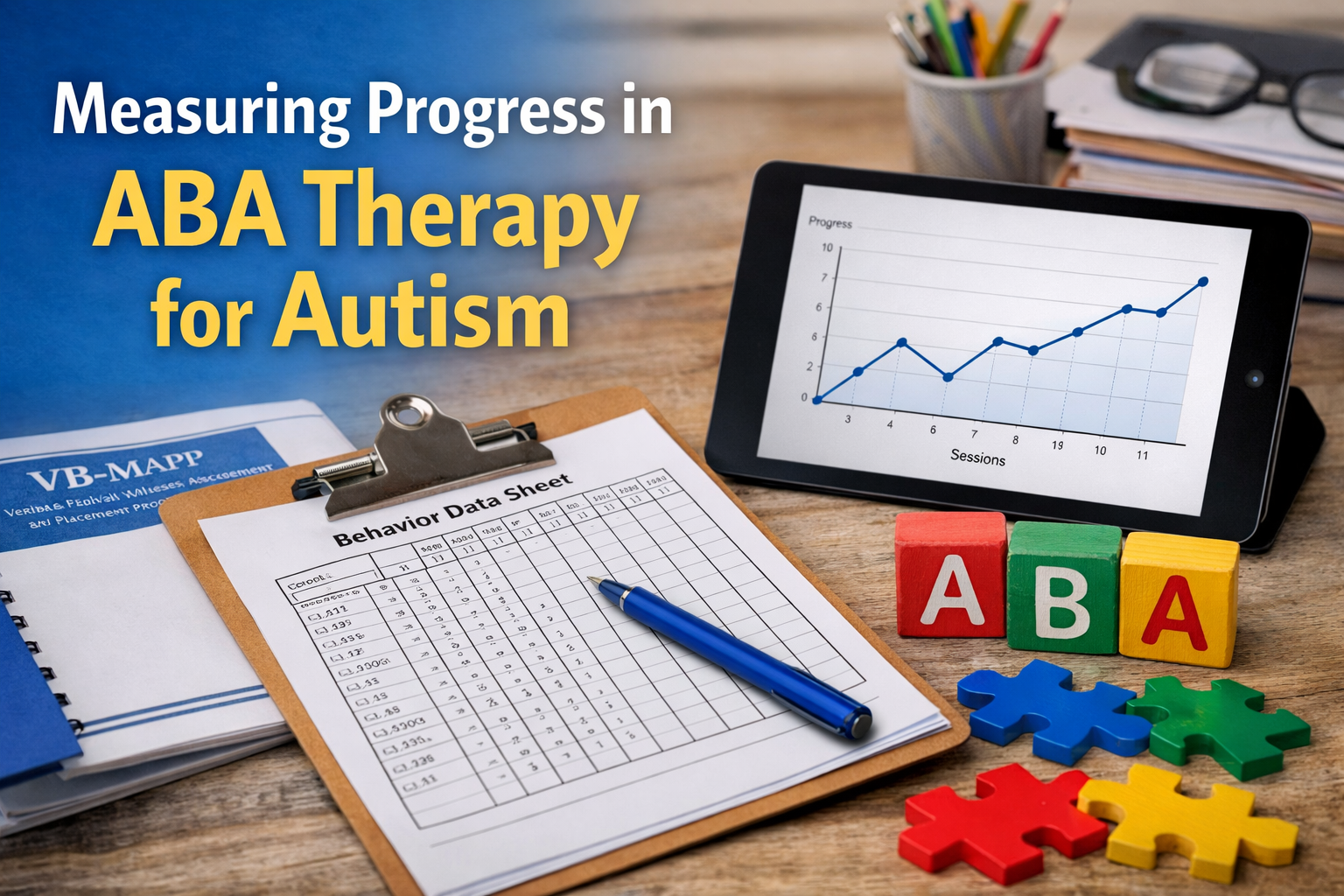
In clinical care, measuring progress is essential to effective treatment. Measuring progress in ABA therapy for autism is a strict, data-driven process. It removes the gut feeling from a child’s care. We don’t guess if a child is getting better. We use objective data to demonstrate progress. At Newline Behavioral Solutions, we use these metrics to make sure every intervention is actually working. This level of clinical oversight is what distinguishes ABA therapy from simple observation.
Understanding ABA Therapy and Its Goals
Applied Behavior Analysis is the scientific study of behavior. It’s not about fixing behaviors; it focuses on developing functional skills. We want to reduce behaviors that interfere with daily life. Every goal must be observable and measurable. If a child needs to learn to ask for a snack, that is a measurable target. This structured approach is why clinic-based ABA therapy works. It focuses on long-term independence through data.
The Role of Assessment in ABA Progress
You can’t track growth without a starting point. We call this a baseline. Before treatment begins, we conduct a comprehensive assessment of the child’s current abilities.
- Initial Assessments: We use standardized tools like the VB-MAPP or ABLLS-R. These are not simply assessments; they function as developmental roadmaps. They show us where a child is compared to their peers.
- SMART Goals: We set goals that are Specific, Measurable, Achievable, Relevant, and Time-bound.
- Functional Behavior Assessment (FBA): If a challenging behavior is present, it is essential to identify the underlying cause. An FBA looks at the triggers and the consequences.

Systematic Data Collection Methods
This process forms the foundation of treatment. During every session, the ABA therapist records data. This is not completed retrospectively at the end of the day.
- Frequency: We count how many times a behavior happens.
- Duration: We time how long a behavior lasts, like a tantrum or staying on task.
- Correct Responses: We track how often a child gets a skill right out of a set number of tries.
- Trial-by-Trial: Each interaction is documented to evaluate the learning trajectory.
Visualizing Data Through Graphing
Raw numerical data can be difficult to interpret quickly. We turn them into graphs. A Board Certified Behavior Analyst (BCBA) looks at these graphs every week. An upward trend indicates skill acquisition. If the line stays flat, we change the teaching method immediately. This visual analysis is how we make medical decisions. This helps prevent time being spent on interventions that are not producing measurable results.
Collaboration and Parent Progress Reports
Families have full access to their child’s treatment data. Our parent training and support includes regular reviews of these charts. We encourage families to review the data directly. When we meet for a progress report, we show you the actual mastery of skills. This transparency ensures alignment between the clinical team and the family. It’s how we make sure clinic progress actually works at home, too.
Measuring progress in ABA therapy for autism is essential to supporting progress toward independence. Newline Behavioral Solutions is committed to using clinical data to guide your child. If you want to see how a data-driven approach works, contact our Elgin clinic today to learn more.